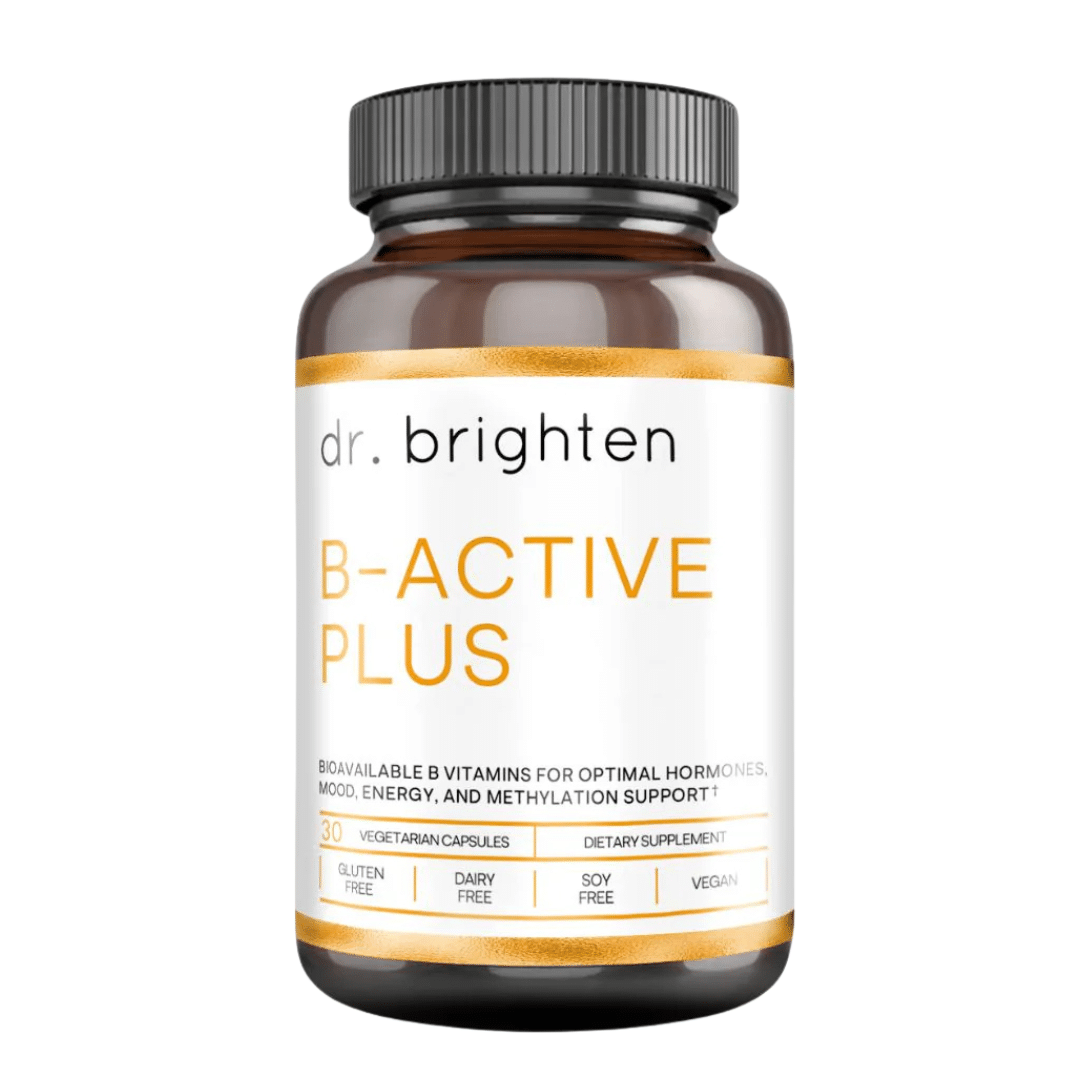
Description
The form decisions here are the formula. Most B complexes use folic acid, cyanocobalamin, and unconverted riboflavin — cheaper, but functionally inadequate for any patient who can’t efficiently convert precursor forms into the active metabolites that actually run methylation. This formula uses 5-MTHF and methylcobalamin as the folate and B12 sources, riboflavin-5-phosphate and pyridoxal-5-phosphate as the active B2 and B6 forms, and adds two methyl donors most B complexes skip entirely: choline (50mg) and betaine anhydrous/TMG (200mg). TMG donates methyl groups through the BHMT pathway — a secondary methylation route that becomes especially relevant when the primary folate-methionine cycle is under genetic or functional stress. Active B vitamins plus methyl donors means this formula supports methylation more completely than anything that stops at the B vitamins alone.
The patients who benefit most are ones I see constantly: women with confirmed or suspected MTHFR variants, women on combined hormonal contraceptives — which deplete riboflavin, B6, folate, and B12 through multiple documented mechanisms — and women presenting with fatigue, mood instability, or cognitive fog that doesn’t resolve with lifestyle changes. The B6 as P5P is worth flagging specifically: pyridoxal-5-phosphate is the cofactor for the decarboxylation reactions that produce serotonin, dopamine, and GABA, so B6 status intersects directly with mood and neurotransmitter support, not just methylation. I treat this as a foundational formula for nearly every patient on hormonal contraception and a first-line consideration before more targeted interventions in the fatigue and mood categories.