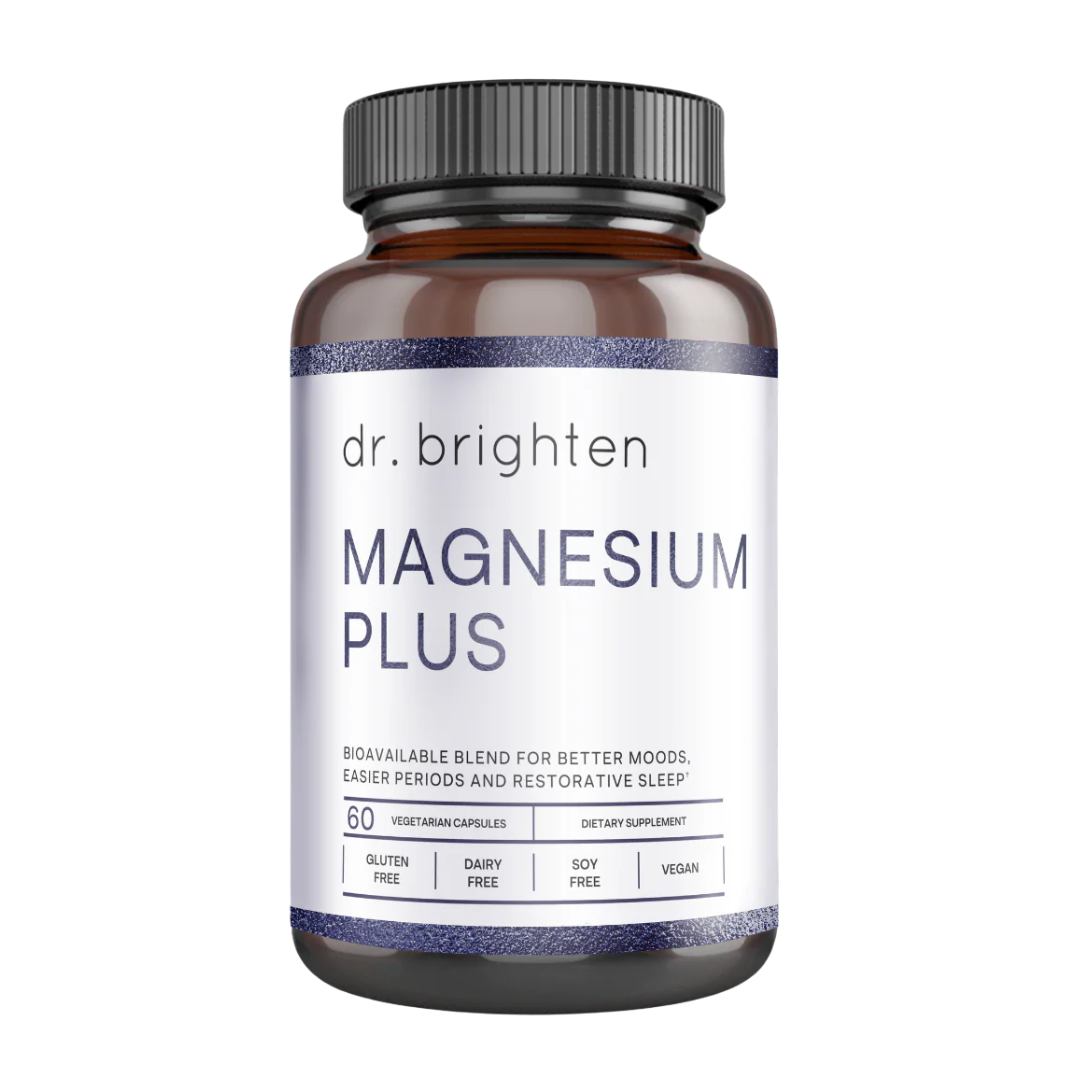
Description
Most magnesium products fail patients before the bottle is empty. Magnesium oxide is the cheapest form and the one most frequently used in mass-market and pharmacy supplements — it has poor bioavailability and a dose-dependent laxative effect that sends patients straight to the “magnesium didn’t work for me” conclusion. Magnesium Plus uses bisglycinate chelate, in which magnesium is bonded to two glycine molecules and absorbed through amino acid transporter pathways rather than the passive diffusion that limits inorganic salts. The result is a clinically meaningful difference in tolerability and a 300mg elemental dose in just two capsules. I use a small amount of magnesium oxide as a buffering agent to maximize elemental yield per serving — this is not an oxide-forward formula; it’s a chelate formula that tolerates well at therapeutic doses.
The clinical applications for this patient population are well-established at the ingredient level. A randomized controlled trial in 155 adults using magnesium bisglycinate at 250mg per day for four weeks showed statistically significant improvement on the Insomnia Severity Index — a finding directly relevant to the women presenting with sleep difficulty driven by HPA axis dysregulation and the cortisol-melatonin disruption that comes with it. Separate RCT data support magnesium for dysmenorrhea, PMS-associated mood and fluid retention, and migraine prophylaxis. The population I work with — women under sustained stress, in perimenopause, or on hormonal contraceptives that deplete magnesium — is at particular risk of running low. I consider this foundational before I move to more targeted interventions.


